 Sobi Moving
How to Pack Fragile Items So Nothing Breaks
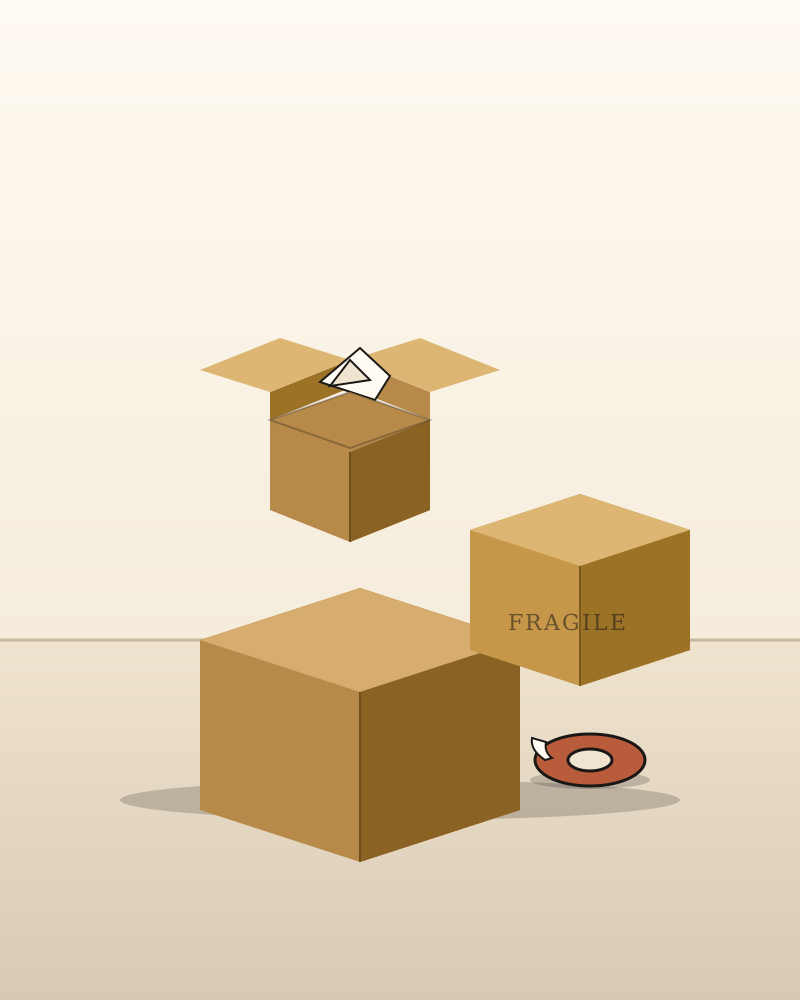
To pack fragile items so nothing breaks, wrap each piece individually, use the right box for each item, cushion the top and bottom with crushed paper, and label every box FRAGILE with arrows pointing up.
Key takeaways
- Wrap every fragile item individually so pieces never touch each other or the box walls.
- Pack plates vertically on their edge, not stacked flat, to prevent cracking.
- Use cell-divider boxes for glassware and stuff each glass with crushed paper.
- Photograph electronics cabling before unplugging and use original boxes when possible.
- Tape an X across glass on art and mirrors, then store them standing on edge.
- Label every fragile box FRAGILE on multiple sides with arrows showing which way is up.
To pack fragile items so nothing breaks, wrap each piece individually in packing paper or bubble wrap, use the right box for each item type, cushion the bottom and top with crushed paper, and never let breakables touch one another or the box walls. The goal is simple: every fragile item should sit snugly, surrounded by padding, with no room to shift in transit.
Whether you're moving across Atlanta or just to the next neighborhood in Brookhaven, the bumps of a moving truck on I-285 will test every box you pack. Below is exactly how our crews at Sobi Moving protect the fragile things that matter most.
Gather the Right Materials First
Good packing starts with the right supplies. Before you wrap a single glass, gather:
- Sturdy boxes, including small and medium dish-pack or cell-divider boxes
- Plain packing paper (newsprint ink can rub off on dishes)
- Bubble wrap for the most delicate pieces
- Packing peanuts or crushed paper for filling gaps
- Strong packing tape and a tape gun
- A thick marker for clear labeling
Choose smaller boxes for heavy fragile items like dishes. A small box that's full is far safer than a large box that's heavy and unwieldy.
How to Pack Dishes
Plates travel best on their edge, like records in a crate, not stacked flat. Stacked plates crack under their own weight when the truck jolts.
- Line the bottom of a small or medium box with two to three inches of crushed paper.
- Wrap each plate individually in packing paper, then bundle two or three together.
- Stand the bundles vertically in the box.
- Fill every gap with crushed paper so nothing shifts.
- Add a layer of padding on top before sealing.
Bowls can be wrapped and nested in small groups, but always cushion between each one.
How to Pack Glassware and Stemware
Glasses and stemware are the most fragile items in most homes. Use a box with cardboard cell dividers if you can find one.
Wrap each glass in paper, then in a layer of bubble wrap, paying special attention to thin rims and delicate stems. Stuff the inside of each glass with a small piece of crushed paper for support. Place glasses upright in the cells, never on their sides, and top off the box with extra padding.
How to Pack Electronics
Original boxes are ideal for electronics because they're molded to fit. If you saved the box for your TV or stereo, use it.
Without the original packaging:
- Photograph the cable connections before unplugging so reassembly is easy.
- Wrap the device in an anti-static material or a soft blanket, then bubble wrap.
- Bundle cables separately in labeled bags.
- Choose a box only slightly larger than the device and fill all gaps with padding.
For flat-screen TVs, use a specialty TV box and keep the screen vertical. Screens are far more prone to cracking when laid flat.
How to Pack Art and Mirrors
Framed art and mirrors need protection against both impact and pressure. Start by placing painter's tape in an X across any glass; if it breaks, the tape holds the pieces together and prevents scratching the artwork.
Wrap the piece in paper, then in bubble wrap, then sandwich it between two sheets of cardboard. Use a specialty mirror or picture box, which telescopes to fit different sizes. Always store framed pieces standing on their edge, never flat, where they can be cracked by anything set on top.
How to Pack Lamps
Disassemble lamps fully. Remove the bulb, the harp, and the shade, and pack each separately.
The base gets wrapped in bubble wrap and stood upright in a box with plenty of cushioning. Lampshades are deceptively fragile, so wrap them in clean paper (not newsprint, which can stain) and place them in their own box. Never stack heavy items on a shade, and avoid nesting metal harps against the shade fabric.
Label Everything Clearly
Labeling is your last line of defense. On every fragile box:
- Write FRAGILE in large letters on the top and at least two sides.
- Note the contents and the destination room, like "Glassware, Kitchen."
- Draw arrows showing which way is up.
Clear labels tell anyone carrying the box, including your movers, to handle it with extra care and keep it upright.
When to Call in the Pros
Some items, like fine china, large mirrors, antiques, and high-end electronics, are worth handing to professionals. Sobi Moving offers full packing and white-glove services across metro Atlanta, using commercial-grade materials and proven techniques so your fragile belongings arrive exactly as they left.
Packing fragile items well takes patience and the right supplies, but the payoff is unboxing your new Atlanta home with everything intact. If you'd rather leave the breakables to experienced hands, reach out for a free quote and let our team handle the careful work.
Related guides & services
Frequently asked questions
What materials do I need to pack fragile items?
Sturdy small and medium boxes, plain packing paper, bubble wrap, packing peanuts or crushed paper, strong tape, and a marker for labeling. Cell-divider boxes are ideal for glassware.
Should I pack plates flat or on their edge?
Always pack plates standing vertically on their edge, like records in a crate. Stacking them flat causes them to crack under their own weight when the truck moves.
How do I pack a flat-screen TV safely?
Use the original box if you saved it, or a specialty TV box. Keep the screen vertical at all times, since screens crack much more easily when laid flat, and photograph the cables before unplugging.
How should I label fragile boxes?
Write FRAGILE in large letters on the top and at least two sides, note the contents and destination room, and draw arrows showing which way is up so the box stays upright.
When should I hire professionals to pack fragile items?
For fine china, large mirrors, antiques, and high-end electronics, professional packing is worth it. Sobi Moving offers full packing and white-glove services across metro Atlanta with commercial-grade materials.
Ready for a calmer move?
Get an honest, no-pressure quote from a metro Atlanta crew that treats your home like their own.
Get your free quote